
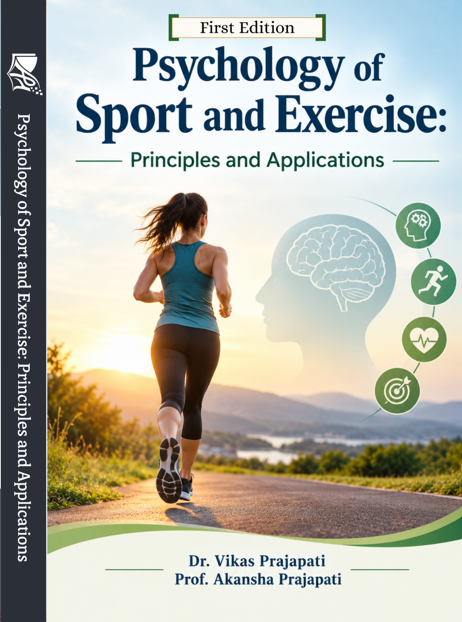
Psychology of Sports and Exercise provides a systematic examination of the psychological processes associated with participation in sport, athletic performance, physical activity, and exercise. The book recognises that sporting outcomes and exercise behaviours are influenced by a combination of physical, psychological, social, and environmental factors. It therefore examines the subject from both performance-oriented and health-oriented perspectives.
The book begins with the foundations of sports and exercise psychology, including its meaning, scope, development, major areas of application, and relationship with related fields of psychology and sport science. It then examines individual differences that influence sporting behaviour, including personality, motivation, attitudes, self-perception, confidence, and perceived competence. Particular attention is given to motivation and goal setting, explaining how intrinsic and extrinsic motives, achievement goals, feedback, and personal objectives can influence performance and continued participation.
A major section focuses on psychological processes during performance. Attention and concentration, arousal, anxiety, stress, emotional regulation, mental preparation, imagery, self-talk, and psychological skills training are discussed in relation to competitive situations. The book considers how athletes can develop psychological strategies for maintaining focus, managing performance pressure, responding to setbacks, and preparing systematically for competition.
The social dimension of sport is also examined through topics such as leadership, team cohesion, communication, group dynamics, coach–athlete relationships, and social support. These factors are considered important not only for team performance but also for creating constructive sporting environments.
The exercise psychology component addresses the psychological factors that influence physical activity initiation and adherence. The book discusses exercise motivation, self-efficacy, enjoyment, exercise habits, barriers to participation, body image, sedentary behaviour, and strategies for maintaining long-term engagement in physical activity. The relationship between exercise, psychological well-being, stress management, and quality of life is also explored.
The book is suitable for undergraduate and postgraduate students of psychology, physical education, sports science, exercise science, health education, physiotherapy, coaching, and related disciplines. It can also provide a useful foundation for coaches, fitness professionals, educators, and practitioners interested in understanding the psychological dimensions of sport and exercise.
Books
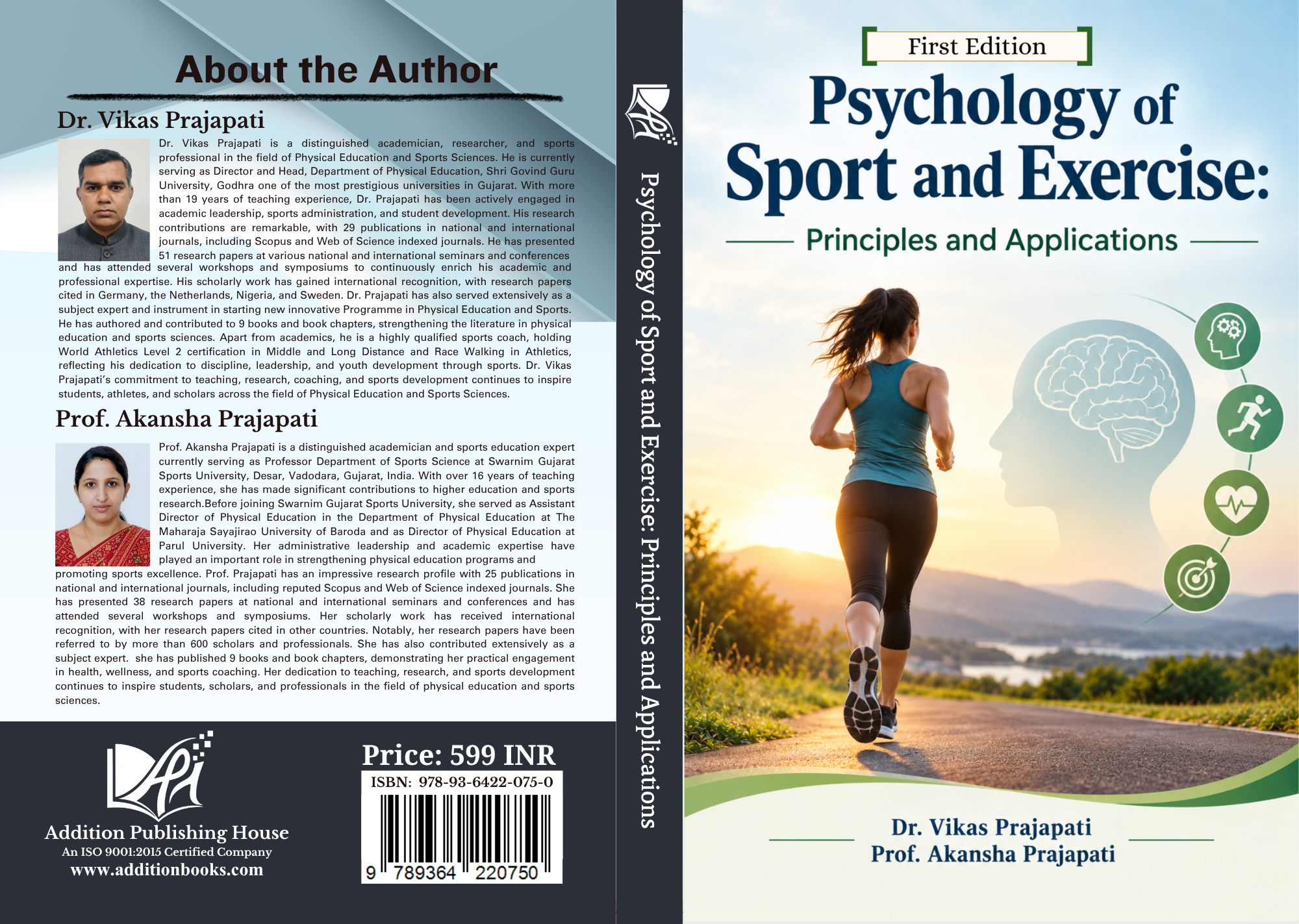
PSYCHOLOGY OF SPORT AND EXERCISE: PRINCIPLES AND APPLICATIONS
₹599.00
| AUTHOR | Dr. Vikas Prajapati, Prof. Akansha Prajapati |
|---|---|
| ISBN | 978-93-6422-075-0 |
| Language | English |
| Pages | 216 |
| Publication Year | 2026 |
| Binding | Paperback |
| Publisher | Addition publishing house |




Reviews
There are no reviews yet.